The Art of the Thoughtful Table
A thoughtful private dinner is among the most enduring forms of hospitality. We discuss the quiet disciplines of the table.
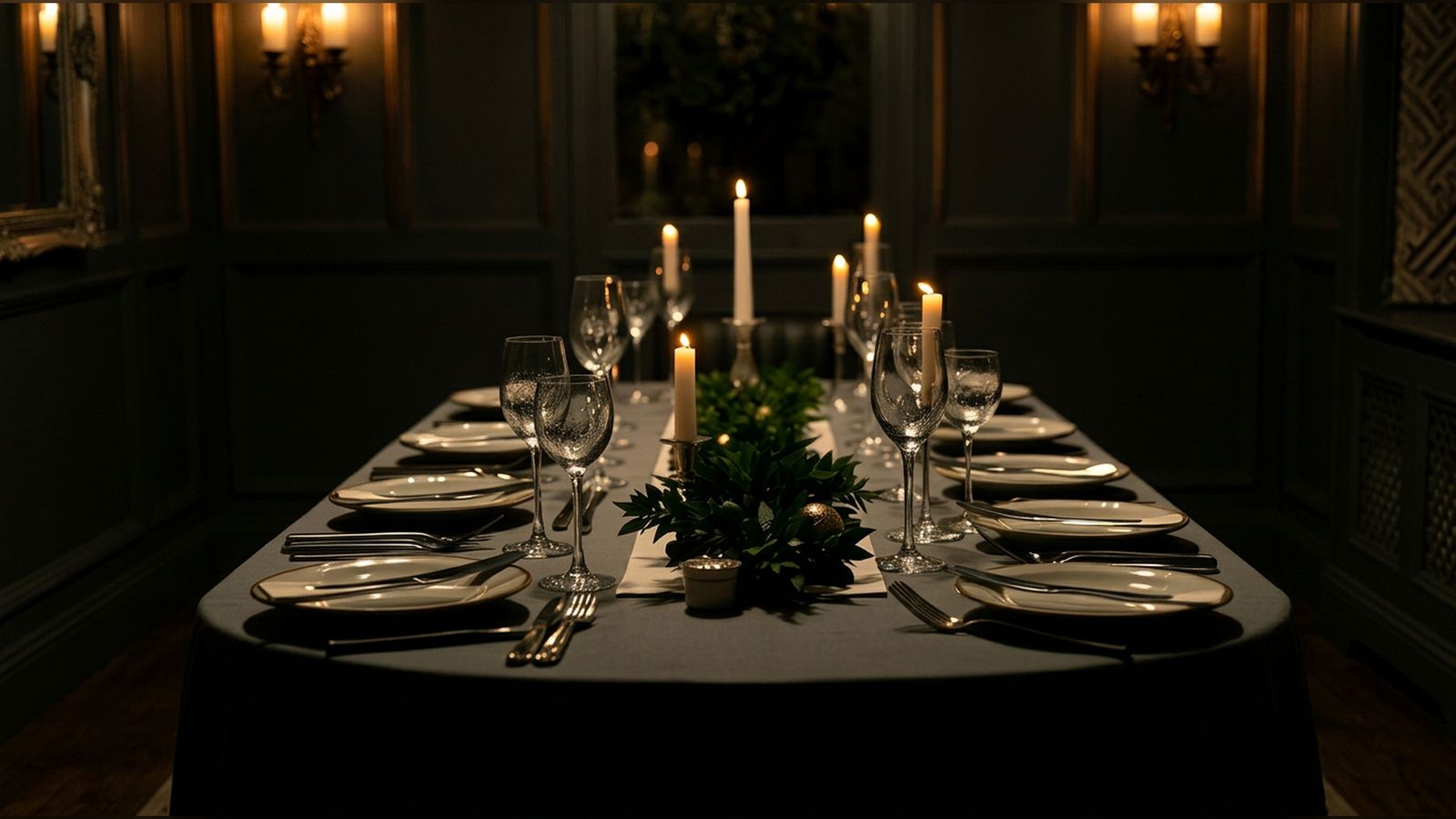
There is, in our view, no form of hospitality more enduring or more revealing of a household's character than a small, thoughtful dinner at the principal's own table. Restaurants, however distinguished, cannot reproduce it. The grand entertainment, with its production values and its many guests, occupies a different category altogether. The private dinner, with eight or perhaps twelve at table, is the form in which the household speaks most clearly, and in which a principal's hospitality, or its absence, is most plainly seen.
The first art of the private table is the composition of the guest list. A great host considers, well in advance, who would like to meet whom, who would wish to discuss what, and which combinations of personality will produce a conversation that all present will remember and none will regret. This is a quiet and unhurried art. The hosts we hold in highest regard send their invitations weeks in advance, sometimes months for the more particular guests, and resist the temptation to fill empty places with whoever happens to be available. An incomplete table of the right people is, in almost every case, preferable to a complete table of the merely acceptable.
A private dinner conducted well is one in which the staff are, throughout, almost invisible. The plates arrive and depart at the right moment without discussion. The wine is offered, accepted or declined, and the matter passes without comment. The temperature of the room, the lighting, the precise pace of the service, all are managed by people who have thought them through in advance. The guests notice none of it, which is precisely the achievement.
Achieving this requires staff of considerable seniority and a household that has, over years, developed the rhythm of the table. A new household will, in our experience, take several years to acquire it. The principal can shorten that period by retaining staff with proper experience and by being patient through the inevitable adjustments of the early years. They cannot eliminate the period altogether.
Good service at a private table is the absence of incident. When each course arrives unremarked, the kitchen has done its finest work.
The conversation at a private table is the responsibility of the host, exercised lightly. They open a topic they know will engage; they draw out the quieter guest at the right moment; they redirect, with grace, the conversation that has run too long on a single subject or that threatens to embarrass. None of this is done conspicuously. A guest at a well conducted table will, on returning home, find it difficult to articulate why the evening was so satisfactory. The answer, almost always, is that the host attended to the conversation as carefully as the chef attended to the meal.


WRITTEN AND COMPILED BY OUR FOUNDER AND CEO, ROBERT WENNEKES
- ServicePrivate Staff and the Possibility of a Normal Life
- ServiceThe Invisible Work of Excellence
- HouseholdPrivate Staff Duties and Compensation
WellbeingThe Trusted Physician
A trusted personal physician is one of the most important relationships a distinguished family can cultivate. We discuss what makes the relationship work.
Read essay