The Discipline of the Principal's Diary
The private diary is the principal's most important document. We discuss the quiet disciplines that distinguish a well-kept diary from a busy one.
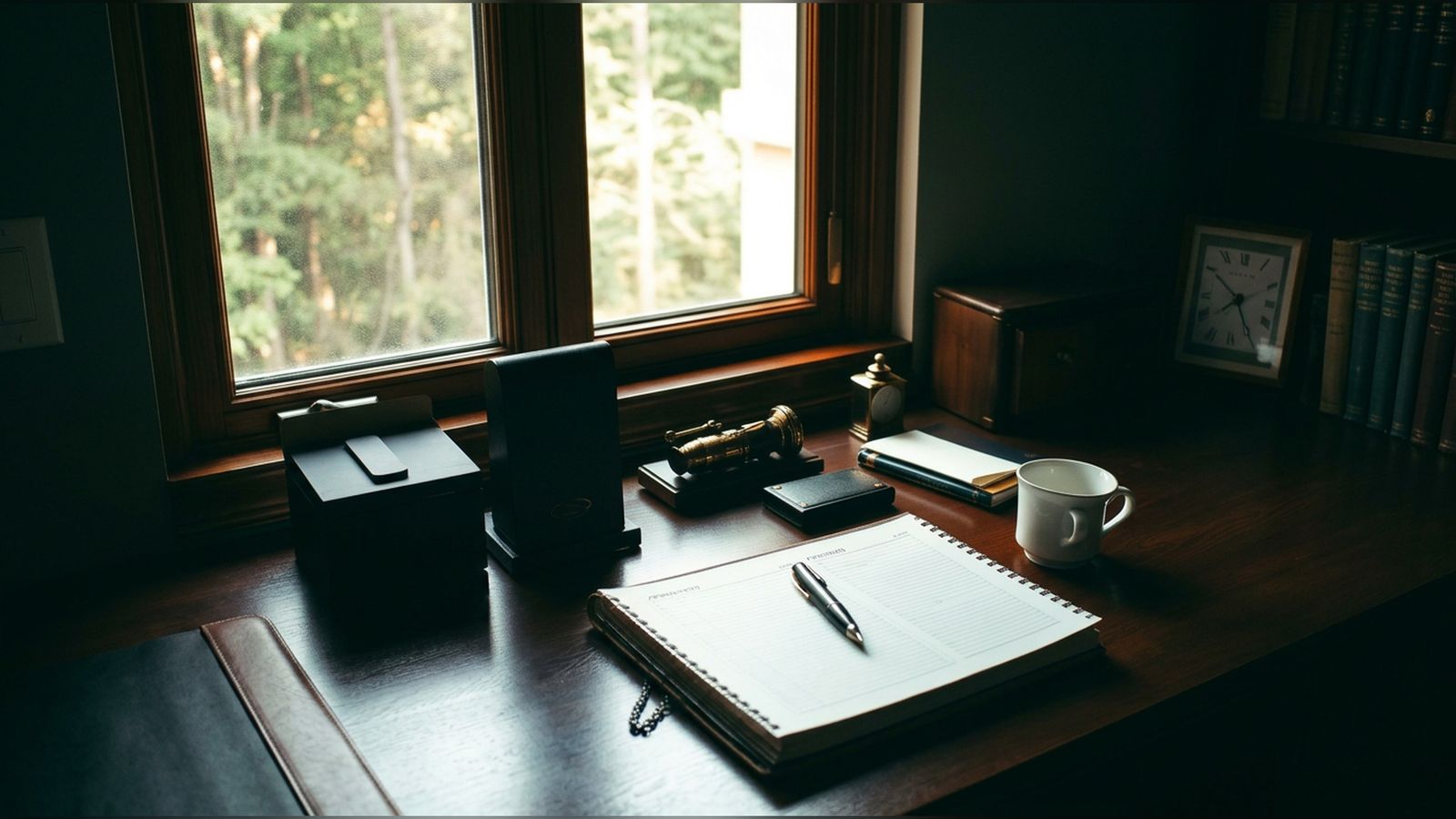
Of all the documents a private office maintains on behalf of a principal, none is more consequential than the diary. It is, in a literal sense, the schedule by which the principal's life proceeds. It governs where they will be, with whom, and to what purpose. A well kept diary gives the principal time to think, to travel without exhaustion, and to give each engagement the attention it deserves. A poorly kept diary, however senior its keeper, produces a principal who is permanently a little tired, a little distracted, and a little irritable, none of which is conducive to good judgement.
There is a temptation, particularly in offices new to the work, to confuse a full diary with a productive one. The two are not the same. We have seen offices in which the principal's day is scheduled in fifteen minute increments from breakfast to dinner, with the result that no engagement gets the attention it requires, no decision is reflected upon, and no conversation extends past its scheduled end. The principal arrives at each meeting under prepared and leaves it under served. This is not stewardship of the principal's time; it is the appearance of stewardship.
A thoughtfully kept diary, by contrast, contains a great deal of unscheduled time. Significant blocks of the week are reserved for thought, correspondence, reading, and the private conversations which produce the best decisions. Travel is planned around the principal's actual rhythm rather than the airline's most efficient routing. Engagements are spaced widely enough that the principal does not arrive at the second still considering the first.
The offices that manage diaries best share, in our experience, a small number of disciplines. They keep one authoritative diary, with one person accountable for it. They protect the principal's mornings; for most principals, this is when serious thought is most readily available. They build in proper transitions, journey time, preparation time, and the quiet quarter of an hour before a difficult conversation. These intervals must be treated as inviolable.
They are willing to decline. The art of saying no, courteously and on the principal's behalf, is among the most undervalued skills in any office. A request declined promptly and with grace costs the relationship far less than one initially accepted and then renegotiated. A capable diary keeper develops the language and the standing to decline on behalf of the principal, without each refusal needing personal attention.
Time, once committed, is the only resource that cannot be replenished. The diary is the document by which it is either preserved or squandered.
We close with an observation on confidentiality. While it may be obvious, it bears stating. The diary is among the most sensitive documents an office holds. It reveals where the principal will be and with whom. From these facts, a great deal can be inferred which the principal would prefer remained unknown. Access to the diary should be tightly held. The technology used to maintain it must be chosen with care. The practice of forwarding diary entries to third parties, even in apparently innocuous circumstances, must be undertaken with deliberation.


WRITTEN AND COMPILED BY OUR FOUNDER AND CEO, ROBERT WENNEKES
- OfficeThe Quiet Virtues of the Family Secretary
- OfficeThe Desk as Seat of Government
- ServicePrivate Staff and the Possibility of a Normal Life
PhilanthropyPhilanthropy with a Quiet Hand
The most effective philanthropic giving is, in our experience, the least visible. We discuss the disciplines of discreet generosity.
Read essay