The Mutual Care of House and Family
The finest households are sustained by a quiet reciprocity. Staff watch over the family, and the family, in turn, watches over the staff. We reflect on the trust, appreciation, and at times genuine love which binds the two.
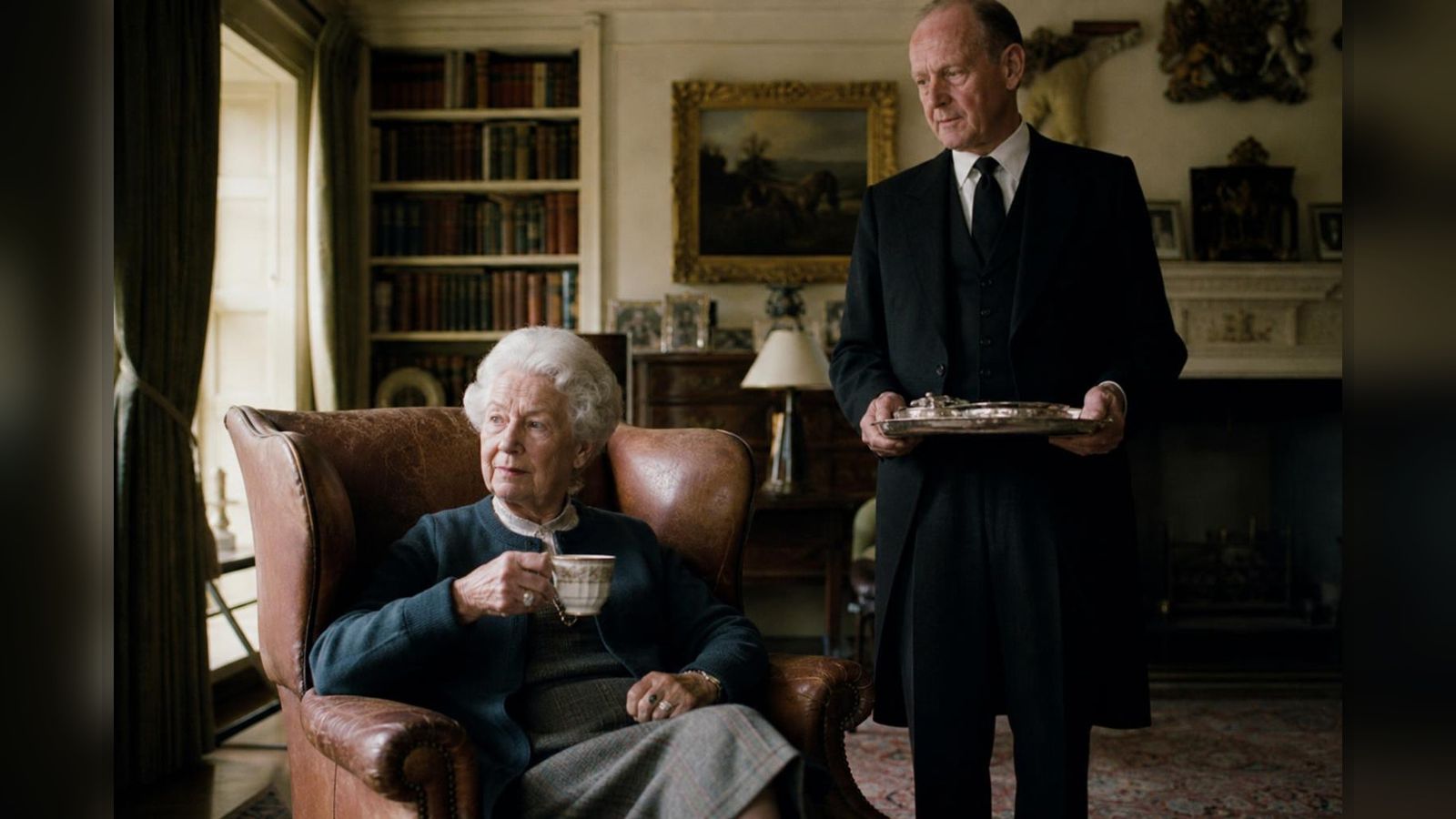
Among the qualities which most reliably distinguish a well ordered household from one merely well staffed, none is more telling than the manner in which the family and those who serve it regard one another. The household payroll, the contracts, the rotas and the manuals can all be in perfect order, yet the house may still feel cold to anyone with the sensitivity to notice. Conversely, a house with warm, watchful, and reciprocal relations between principal and staff is felt at once by family and visitor alike. It is a place where life proceeds with an ease that no amount of expenditure can manufacture.
We have long held the view that the relationship between a distinguished family and its household is, at its best, one of mutual care. The staff watch over the family in matters small and large, often anticipating needs the principal has not yet articulated. The family, in turn, watches over the staff, taking a discreet interest in their lives, their families, their health and their futures. The two responsibilities lean upon one another. Where one is absent, the other tends, in time, to wither.
Those who serve a household closely come to know the family in a manner few others ever do. The housekeeper who has been with the principal for fifteen years notices, before anyone else, that the morning tray has been left untouched two days in succession. The driver registers, without remark, that the route home has been requested by way of a particular church for the third time in a fortnight. The butler observes, with the discretion such observation requires, that the principal has dined alone more often than is usual. None of this is reported. None of it requires reporting. Such information is held privately and acted upon with the gentleness the situation requires. These actions are themselves unobtrusive: a softer light in the drawing room, a favourite supper served without being asked, a word to the principal’s secretary that perhaps the diary might be lightened for a week.
This watchfulness is not surveillance. It is the natural attentiveness of those who have lived in close proximity to a family for many years and have come to care, genuinely, for its wellbeing. It cannot be hired. It can only be cultivated, over time, in conditions of mutual trust.
If the staff carry an implicit responsibility for the family, the family carries an equal and answering responsibility for the staff. The most enduring households we know are those in which the principal regards the men and women who serve the house not as fixtures of the establishment but as individuals whose lives matter, whose circumstances are known, and whose loyalty is met with loyalty in kind. A principal does more for the spirit of the house than any redecoration could achieve through simple acts of personal interest. They may remember the names of a butler’s grandchildren or ask after a housekeeper’s mother in failing health. They might also arrange, without fuss, that a long-serving member of staff is properly cared for in retirement.
In our work, we have seen the practical forms this care commonly takes. There might be a small annuity, privately settled upon a chauffeur of thirty years. A cottage on the estate could be offered to a widowed cook for as long as she wishes it. School fees might be met for the children of a valued nanny; hospital bills attended to without the staff member ever being asked. None of these acts is publicised. Most are arranged through the family's office in such a manner that the recipient understands the gesture but is spared any awkward acknowledgement. They are simply the natural expression of a relationship which has, over years, become something more than employment.
A household is not made by those who serve, nor by those who are served, but by what passes unspoken between them.
It is not fashionable, in our age, to speak of love between principal and staff. The word is supposed to belong elsewhere. Yet anyone who has spent time in households where the same nanny has raised two generations, or where the same butler has stood discreetly at the family's most private hours of joy and sorrow, knows the truth of this. When the same secretary has known the principal longer and more truly than many of his closest acquaintances, it also becomes clear. The proper word, candidly used, is exactly that. There is, in such relationships, an affection that cannot be reduced to fondness or gratitude. It is the bond of people who have shared a life, even if from different sides of the same room.
We do not press this language upon families who would find it uncomfortable. We only observe that, where it is permitted to exist, it is one of the rarest and most steadying influences a household can possess. It outlasts difficult years. It survives changes of fortune. It is, in our experience, the subtle inheritance which the most fortunate families pass to the next generation, and which the next generation, if it is wise, takes pains to preserve.
A Private Advisory Office cannot create this kind of relationship between a family and its staff. It belongs to the people themselves and to the years they share. What the office can do, and what we take some care to do, is to ensure that the structures around the household allow such relationships to take root. We attend to recruitment with the long horizon in mind, knowing that the right appointment is one the family might still be glad of in twenty years. We see to it that contracts, pensions, accommodation, and the practical arrangements of staff life are settled with proper generosity. This frees the principal to be principal, and allows the staff to give the family the watchful, affectionate attention which only a settled mind can offer.
When all of this is in order, the house begins to look after itself in a manner which can seem, to outsiders, almost effortless. It is not effortless at all. It is the visible expression of an unspoken contract, kept on both sides over many years. This contract is between those who have made the family's life their work and the family who, in turn, have made these men and women a part of their own.


WRITTEN AND COMPILED BY OUR FOUNDER AND CEO, ROBERT WENNEKES
- HouseholdPrivate Staff Duties and Compensation
- HouseholdService Across Borders and Cultures
- HouseholdThe Private Cigar and the Art of the Leaf
ReflectionOn the Character of an Advisory Office
Spring is upon us. A good moment to reflect on what a Private Advisory Office is for, and what distinguishes it from its more conventional cousins.
Read essay