The Equestrian Establishment as a Household
A serious stable is not an amenity but a household in its own right. We examine the staff, standards and disciplines which distinguish a thoughtful equestrian establishment.
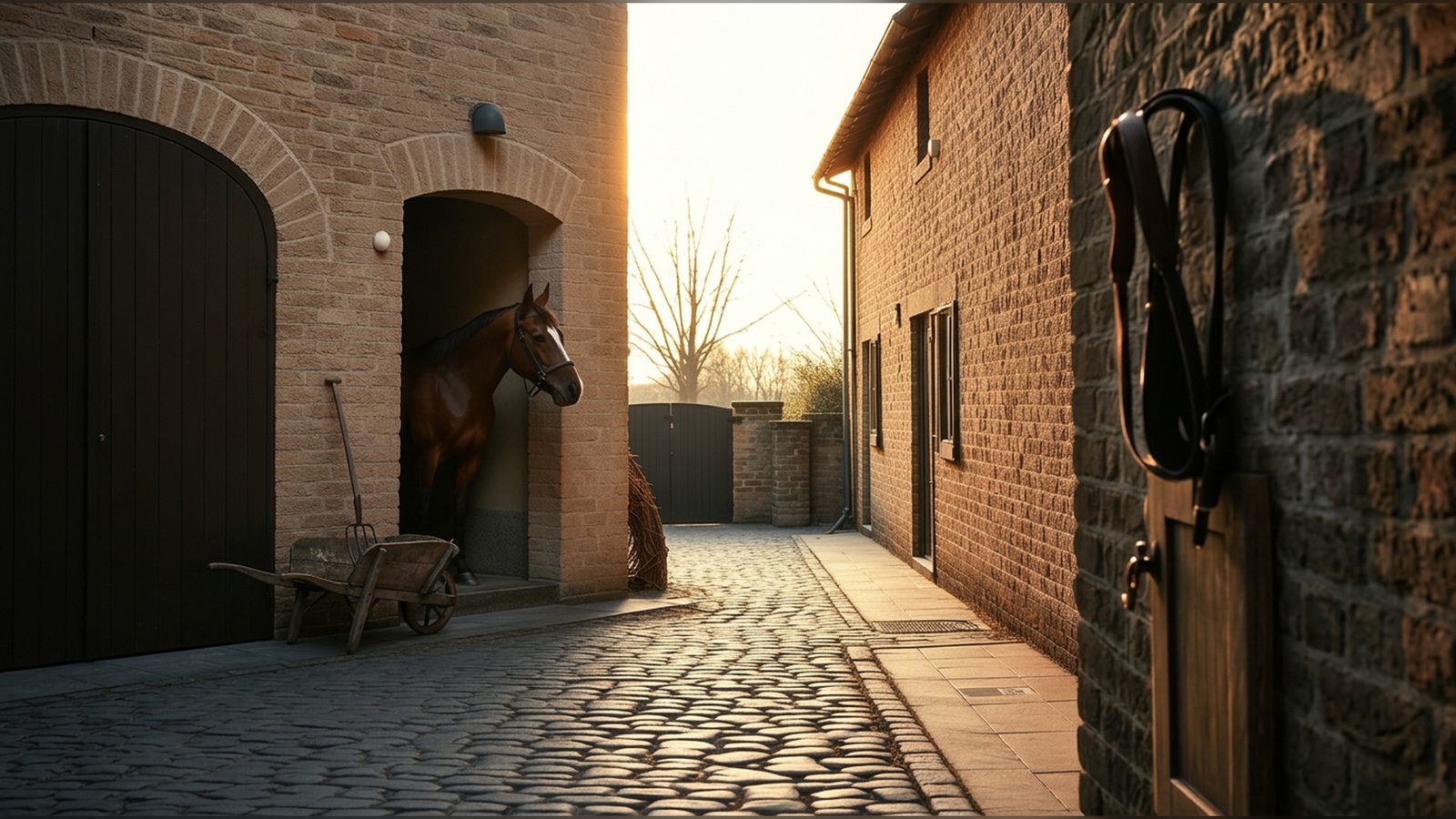
The principal who maintains horses of any seriousness has, whether they recognise it on the day they begin or only several years later, established a household within the household. The stable yard has its own staff, its own daily rhythms, its own suppliers, its own veterinary professionals, and its own standards of care which, in many respects, are more exacting than those that apply elsewhere on the estate. The horses themselves, properly speaking, are members of the establishment whose welfare is the responsibility of the principal in a way the merely ornamental possessions of the household are not.
Across many years of advising on equestrian arrangements of various scale, we have observed a particular pattern. The establishments which function with greatest distinction are those in which the head groom or stable manager is a long career professional of sound judgement, in post for many years, and given the operational authority the work properly requires. The establishments which struggle are, almost without exception, those in which the principal has appointed a series of less experienced practitioners on commercial terms that do not allow the depth of knowledge the work demands.
A well run stable yard, like a well run kitchen, is recognisable to the experienced visitor within a very few minutes. The cleanliness of the boxes, the condition of the tack, the manner in which the staff move about their work, the bearing of the horses themselves; each of these reveals, to anyone who knows what to look for, the standards the establishment keeps when no visitor is present. We counsel principals to walk their own yard, in the early morning and without notice, several times a year; not to find fault, but to understand the standards their staff have set in their absence.
A horse is the only member of the household which cannot tell you when it is unhappy.
The relationship with the equestrian veterinary practitioner is, in any serious establishment, among the most important professional relationships the household maintains. The vet who has known a particular horse over many years, who has attended its routine care and the small problems any horse presents over a working life, is the professional on whose judgement, in the moment of a serious clinical decision, the principal can rely. We counsel against the temptation, in cost conscious years, to substitute a cheaper practitioner for an established one; the saving is small, and the loss of accumulated clinical knowledge is considerable.
We close with a quiet point about the principal's own competence. The principal who rides their own horses, even at a modest level, has a relationship with the establishment which the principal who does not ride cannot have; they know, in their own person, what the horses are capable of, what the staff are dealing with, and what skilled horsemanship looks like when it is properly performed. We do not say that every principal must ride; we do say that the principal who keeps a serious yard should give some careful attention, in their own life, to understanding what the establishment is for.


WRITTEN AND COMPILED BY OUR FOUNDER AND CEO, ROBERT WENNEKES
- EstateThe Stewardship of the Country Estate
- EstateThe Quiet Authority of the Estate Gardens
- EstateThe Quiet Discipline of the Game Book
EtiquetteThe Quiet Art of Handwritten Correspondence
The handwritten letter has not been replaced; it has only become rarer, and therefore more powerful. We examine the discipline of thoughtful correspondence in a digital age.
Read essay