The Quiet Art of Handwritten Correspondence
The handwritten letter has not been replaced; it has only become rarer, and therefore more powerful. We examine the discipline of thoughtful correspondence in a digital age.
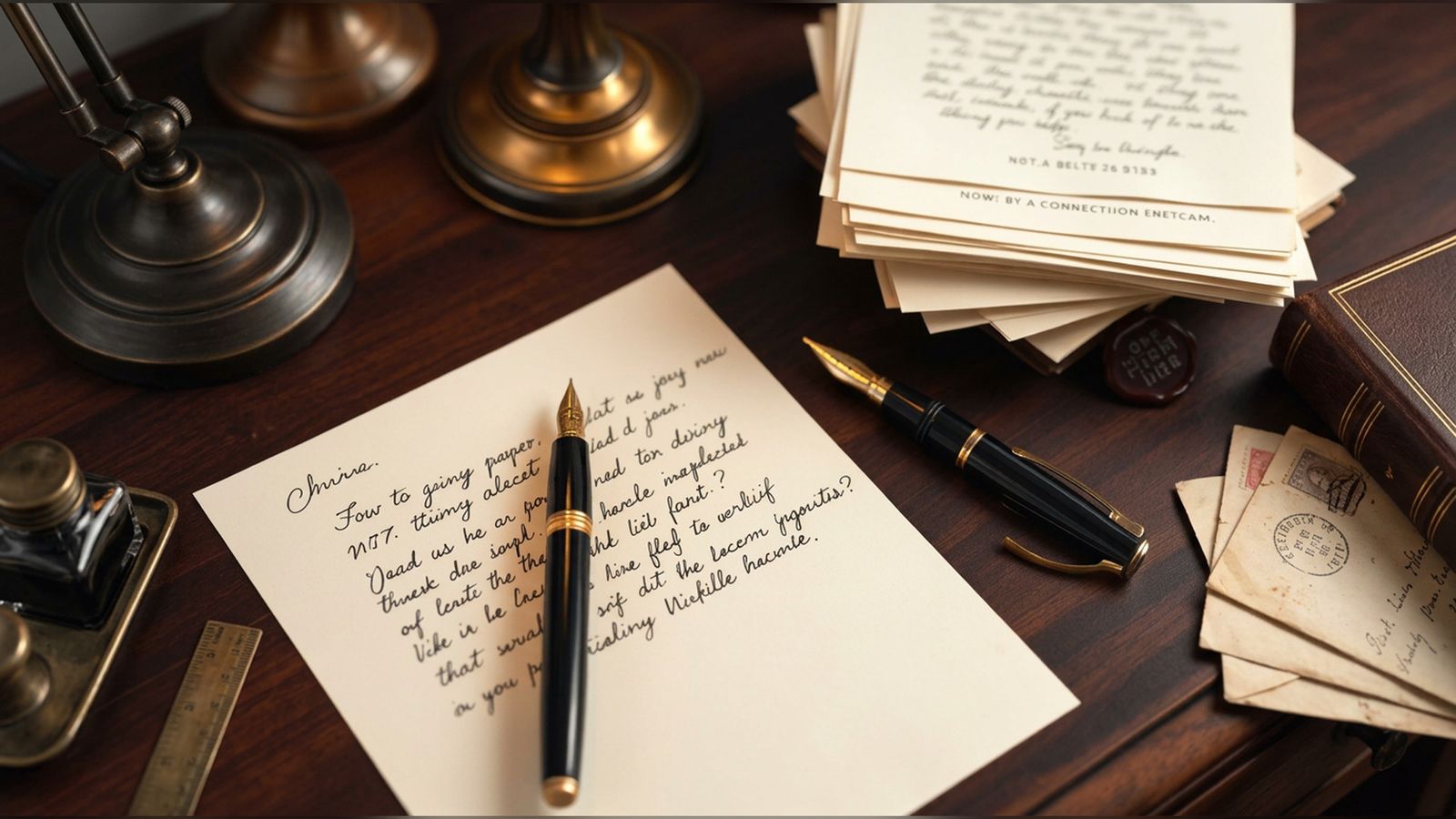
A handwritten letter, received in an age of digital communication, possesses a particular quality. The electronic message cannot reproduce it, regardless of the care in its composition. Before it is opened, the letter announces that the sender has given the recipient a piece of their own irretrievable time. It confirms the recipient as the sole intended audience for the words it contains. These two qualities, scarcity of time and singularity of address, are the foundation of powerful correspondence.
We are sometimes asked by principals of the younger generations whether written correspondence has a continuing role in a digital age. Our answer, given without hesitation, is that the practice has become more powerful precisely because it has become rarer. A letter sent today, on cream laid paper in a careful hand, arrives into a part of the recipient's life otherwise empty of such things. For that reason, it is almost certain to be remembered.
We counsel principals who wish to maintain a serious correspondence to invest, once, in the materials the practice properly requires. This means a standing order with a quality stationer for paper bearing the principal's address. It also means a fountain pen of careful choice and a single ink, used without variation. A small stock of envelopes and stamps in the desk drawer ensures a letter can be written and posted without practical obstacle. These are not extravagances; they are the modest tools that turn writing a letter from an occasional production into a sustained habit.
A letter is the only message which arrives wearing the time it took to send.
Not every communication calls for a letter. A principal who tries to conduct all their correspondence in writing will quickly find the practice unsustainable. Our counsel is to reserve the written letter for occasions that genuinely deserve it: the thoughtful note of thanks after substantial hospitality; the letter of condolence on a serious bereavement; the personal congratulation on a significant achievement; or the thoughtful reply to correspondence which has itself been carefully composed. Used in this disciplined way, the letter retains its weight and produces, over the years, a discreet and accumulating effect on the principal's most important relationships.
We close with a reflection on dictated correspondence. It has a longer and more respectable history than its modern reputation might suggest. A principal whose volume of correspondence calls for a secretary's assistance, and who works with that secretary in the required thoughtful fashion, is not failing to write personally. That principal is using available resources to maintain a level of thoughtful correspondence otherwise impossible. What matters is that the recipient receives a communication which has been thought about, addressed to them in particular, and signed by the principal in their own hand.


WRITTEN AND COMPILED BY OUR FOUNDER AND CEO, ROBERT WENNEKES
- EtiquetteHospitality and the Reception of Guests
- ServicePrivate Staff and the Possibility of a Normal Life
- ServiceThe Invisible Work of Excellence
GovernanceThe Household Archive and the Memory of a Family
A household which keeps no archive forgets itself within a generation. We consider the patient work of preserving the documents, photographs and decisions which constitute a family's institutional memory.
Read essay