The Librarian and the Living Collection
A serious private library is not a furnishing but an institution. We consider the quiet office of the librarian, who keeps a household's reading alive across generations.
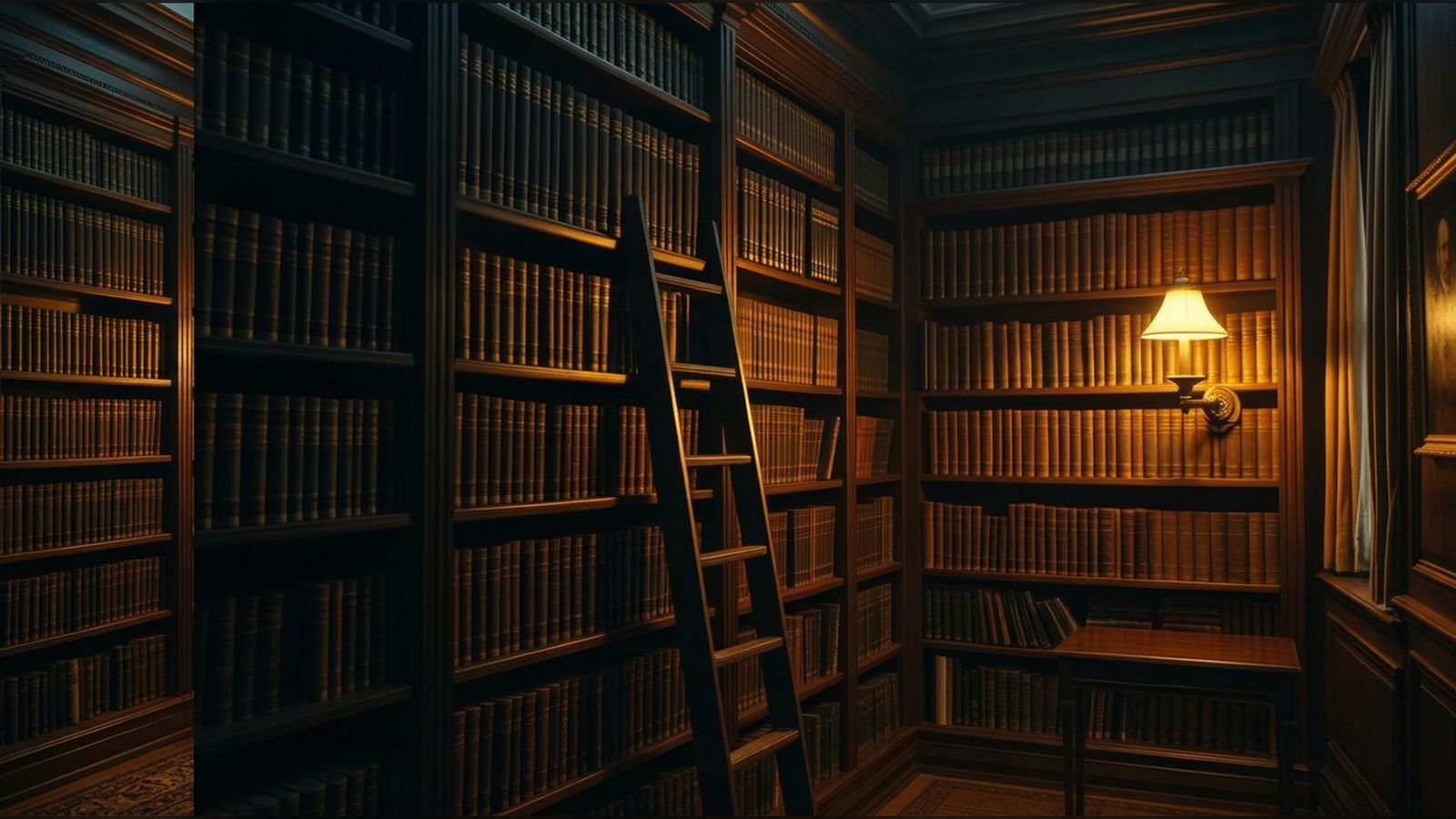
There is a particular pleasure, in the houses where the practice survives, of entering a private library and sensing immediately that the room is in use. The fire has been laid, the day's papers folded on the side table, a small slip of paper marking a page in a volume left open on the reading desk. Such rooms do not maintain themselves. They are the work of a particular member of staff, often informally titled, whose office has been preserved in the most thoughtful houses for several centuries.
The private librarian is rarely a full appointment in the modern household. The role is more often held in part by the chief of staff, by a long serving secretary with a scholarly disposition, or by a visiting specialist who attends the library on a quarterly arrangement. What matters is not the title but the practice. There should be a single individual who knows the collection in its entirety, who knows where each volume sits and why. That person is the natural point of reference when the principal asks, as principals do at unpredictable hours, where a particular passage may be found.
A library which is merely accumulated is not a library; it is a heap. The collections we admire are the result of patient acquisition over decades, each volume chosen for a reason which the librarian and the principal can both articulate. The librarian's role is to maintain a private correspondence with two or three trusted antiquarian dealers. They must attend the relevant auctions in person where the principal cannot. They must also refuse, with tact, the volumes which would dilute the collection's character, even when offered on attractive terms.
The most distinguished private libraries are organised not by genre but by the shape of the principal's mind. The arrangement of the shelves, the choice of which volume sits beside which, the small clusters of related works gathered together regardless of period: all are acts of editorial judgement. These are performed by the librarian in consultation with the principal, and refined over many years.
A library tells the visitor what the household has thought about, and what it intends to think about next.
The conservation of a private library is the part of the work which most often falls into neglect. Conditions which are tolerable for a year are corrosive over a decade. The slow effects of light, humidity, and dry air from a winter heating system accumulate without anyone noticing, until a binding cracks or a plate spots beyond economic repair. The librarian's most valuable habit is the annual condition review, performed in the principal's absence. A written note is made of any volume which needs attention from the binder or the conservator.
We close on a point which has been made to us, in private, by more than one principal of considerable means. A library which is merely beautiful is not interesting; a library which is merely valuable is not a library at all. The libraries which give the greatest pleasure, both to the principal and to the next generation who eventually inherit them, are those in which the volumes have been read and the margins occasionally annotated in pencil. In these collections, the conversation between the family and its books is carried on without interruption across the years.


WRITTEN AND COMPILED BY OUR FOUNDER AND CEO, ROBERT WENNEKES
- HouseholdPrivate Staff Duties and Compensation
- HouseholdService Across Borders and Cultures
- HouseholdThe Mutual Care of House and Family
StewardshipThe Cellar and the Passage of Time
A serious private cellar is an exercise in patience and forethought. We discuss the quiet disciplines which distinguish a great cellar from a merely well stocked one.
Read essay