The Tailor and the Discipline of Fit
The relationship between a principal and a tailor is among the longest in the thoughtful household. We examine why fit, far more than fabric, is the true measure of the craft.
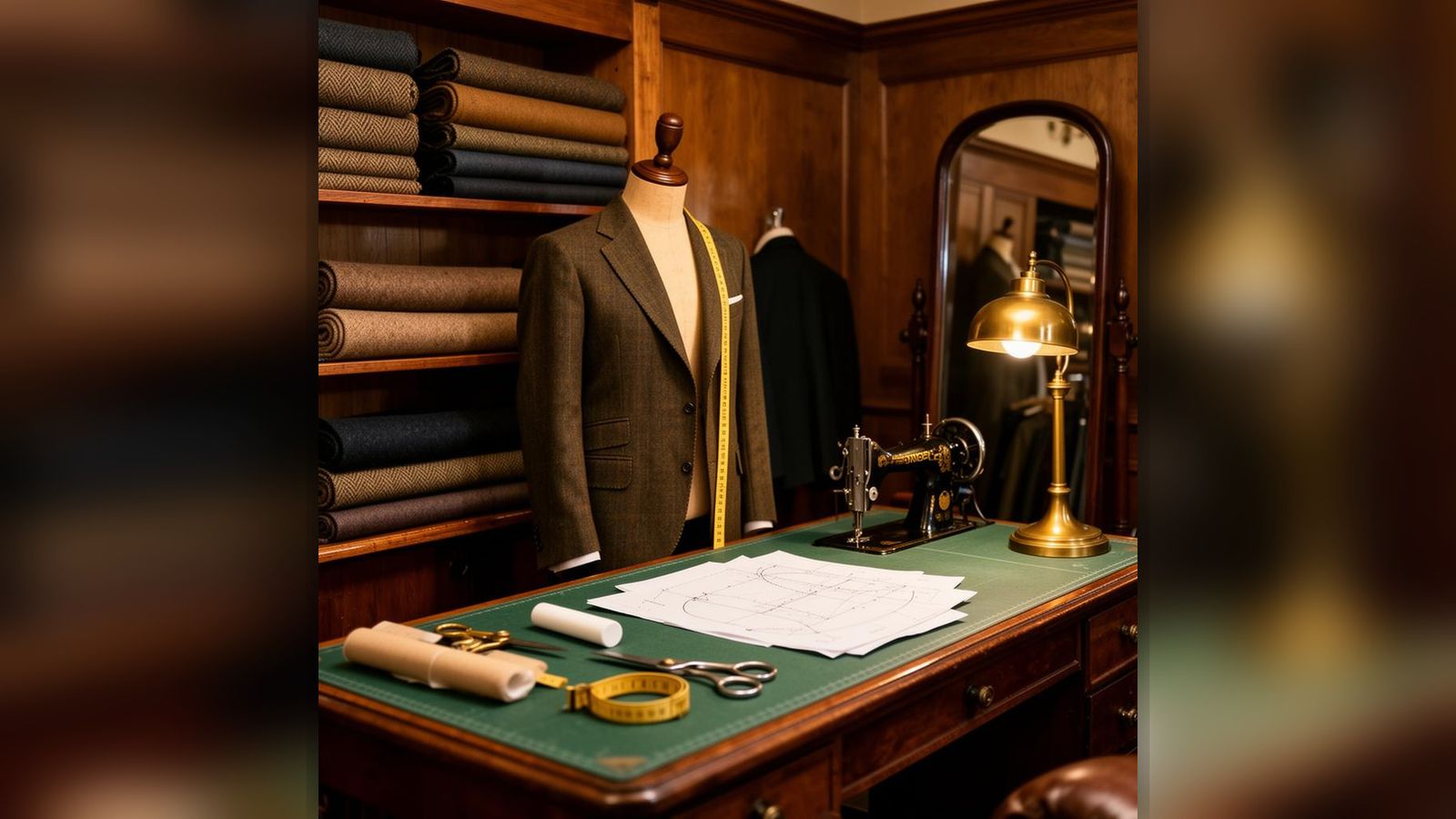
The relationship between a principal and a tailor, properly conducted, is among the longest the household ever sustains. It begins, in many cases, in the principal's twenties, and continues, with the same firm and often with the same individual cutter, for the better part of a working life. By the time the relationship matures, the tailor knows things about the principal which the principal has perhaps forgotten about themselves. The garments which result reflect that accumulated knowledge in ways that are immediately recognisable to anyone trained to see them.
We are sometimes asked, by principals who are at the beginning of such a relationship, what distinguishes a great tailor from a competent one. The answer is rarely the fabric, which any reputable house can source at the necessary level. It is the fit, which is the slow accumulation of small judgements over many fittings, and the discipline of insisting that each successive garment improve upon the last in a particular and articulable way.
We counsel principals who are establishing a new tailoring relationship to be patient with the first commission, which is rarely the principal's finest garment. The first suit in any serious tailoring relationship is partly clothing, partly a research instrument. The cutter is learning the principal's body, posture, and habits. The resulting garment will reveal as much through its small imperfections as through its successes. The principal who insists on perfection in the first commission has misunderstood the craft; the principal who returns for a second and third commission, with patience and thoughtful feedback, is building something which the impatient principal cannot.
Fit is a conversation conducted over many years, not a transaction completed in a single afternoon.
A wardrobe is not a collection of garments but a system. The best dressed principals we know maintain wardrobes which are surprisingly compact, with a small number of garments of considerable quality, each of which performs a precise role in a coherent rotation. The work of building such a wardrobe is, in part, the work of refusing the garments which would not earn their place in it; a discipline which is harder than the discipline of acquisition.
We close with a point about discretion. The most distinguished wardrobes are not the most visible. The principal whose tailoring is immediately remarkable to a casual observer has, in our view, allowed the wardrobe to overtake the wearer. The principal whose tailoring is recognised only by another wearer of the same standard has achieved the proper relationship between the garment and the person inside it.


WRITTEN AND COMPILED BY OUR FOUNDER AND CEO, ROBERT WENNEKES
- ServicePrivate Staff and the Possibility of a Normal Life
- ServiceThe Invisible Work of Excellence
- HouseholdPrivate Staff Duties and Compensation
HouseholdThe Librarian and the Living Collection
A serious private library is not a furnishing but an institution. We consider the quiet office of the librarian, who keeps a household's reading alive across generations.
Read essay