The Quiet Authority of the Estate Gardens
A great private garden is not a possession but an inheritance. We consider the role of the head gardener and the long horizons which distinguish thoughtful grounds from merely tidy ones.
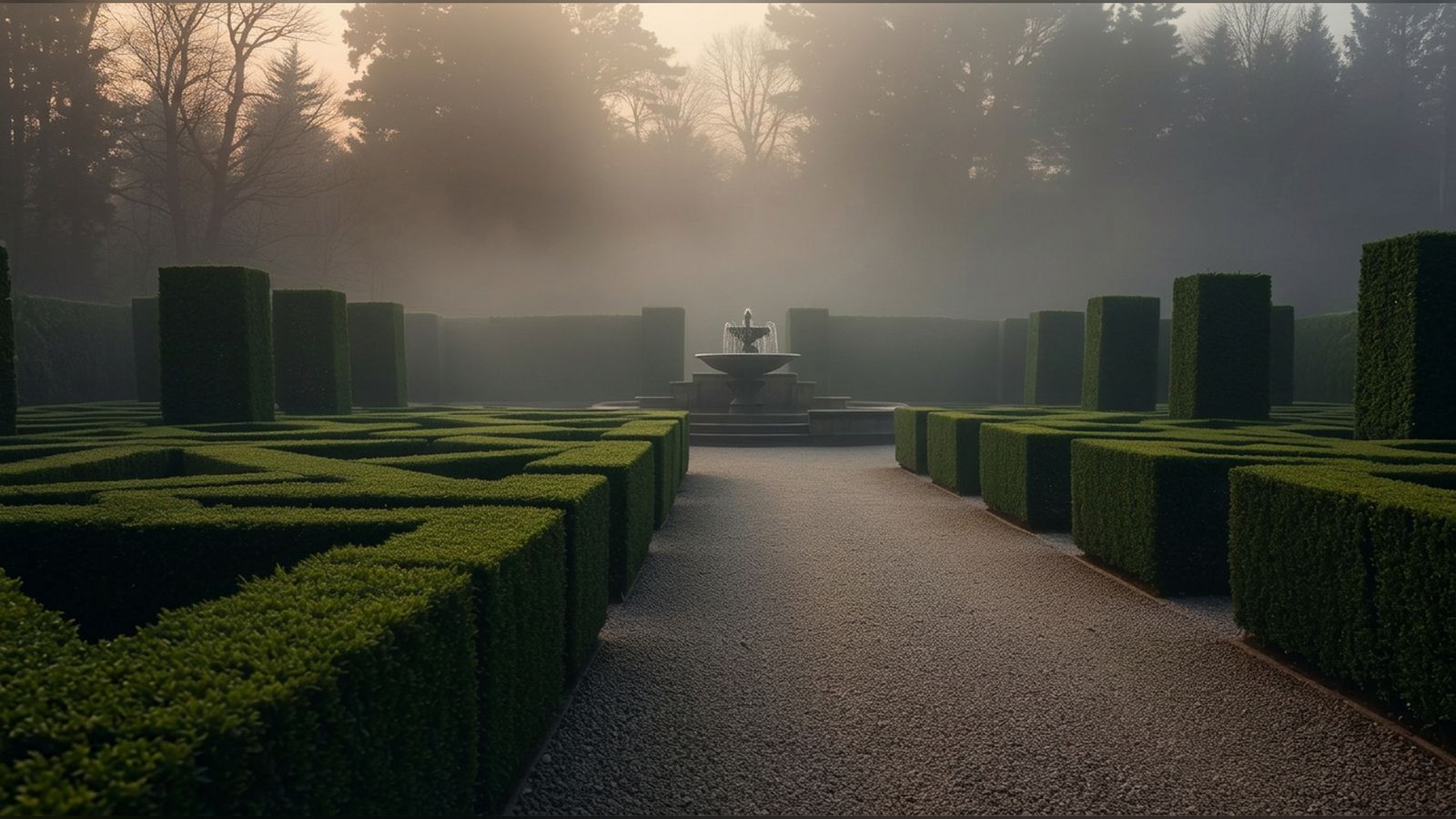
There is a tradition in the older European houses, only partially preserved in our own century, of treating the private gardens as the responsibility of a particular member of staff whose authority within the grounds is, in practice, considerable. The head gardener of a serious estate is not a contractor whose work begins in March and ends in October. The head gardener is a long-horizon professional, often in post for twenty or thirty years. Decisions about what is planted in a given season will, in many cases, only become visible to the principal a decade later.
We are sometimes engaged by principals who have recently acquired an estate of some seriousness and who wish to understand how the grounds should be approached. Our counsel, in nearly every case, is to resist the impulse to make immediate and visible improvements. A garden of any quality is the result of decisions made over generations. The new principal's first responsibility is to understand what has been intended, by whom, and over what time scale, before introducing changes that may compromise the thoughtful work of those who came before.
A specimen oak planted today will not reach its proper authority within the principal's lifetime. A yew hedge established this autumn will not perform its full role in the garden's composition for thirty years. These facts are unremarkable to the head gardener, who works in the time horizon the plants themselves require. For a principal accustomed to the shorter horizons of commercial life, they are a reorienting discovery. The garden, more than any other element of the household, asks the principal to think in terms of the next generation rather than the next quarter.
A garden is the slowest conversation a household conducts with the future.
The most thoughtful private gardens share a particular quality of visual discretion. They do not announce themselves. They reveal themselves slowly as one walks them, in small, private moments that the casual visitor may not consciously register. A view that opens unexpectedly through a gap in a hedge; a seat placed precisely where the morning light falls in late spring; a discreet water feature whose sound is heard before it is seen. The art of these effects is the art of restraint: of refusing, at every point, the planting or the structure that would draw attention to itself at the cost of the larger composition.
We close with a point about succession, which applies to the head gardener as it applies to any senior member of the household. The departure of a head gardener of long standing, without an apprentice in place, is a serious event for the grounds. It is one a thoughtful principal will have anticipated several years in advance. The continuity of judgement the gardens require cannot be transferred by a written brief. It must be transferred in person, over seasons, by walking the grounds together until the successor sees them as the predecessor saw them.


WRITTEN AND COMPILED BY OUR FOUNDER AND CEO, ROBERT WENNEKES
- EstateThe Equestrian Establishment as a Household
- EstateThe Stewardship of the Country Estate
- EstateThe Quiet Discipline of the Game Book
WardrobeThe Tailor and the Discipline of Fit
The relationship between a principal and a tailor is among the longest in the thoughtful household. We examine why fit, far more than fabric, is the true measure of the craft.
Read essay