Private Staff and the Possibility of a Normal Life
Can a member of private staff sustain a marriage, raise children, and keep a private life of their own? We examine the question with the honesty it deserves.
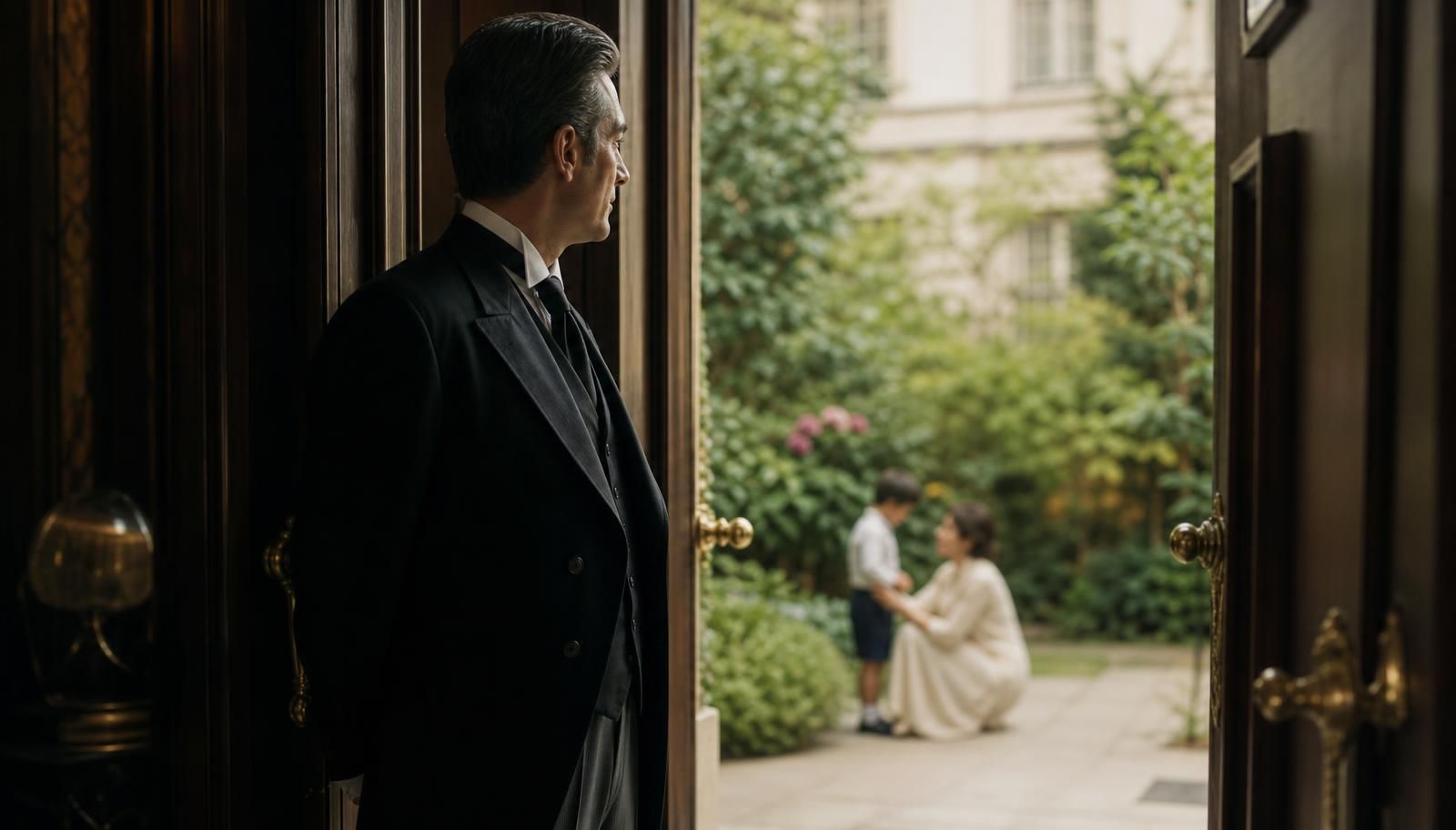
It is a question we are asked more often than almost any other, both by principals who wish to understand the people who work for them and by young men and women who are considering a career in private service. Can one be a butler, a housekeeper, a chef, a valet, or a lady's maid, and still have a normal life? Can one marry, raise children, maintain friendships outside the household, and return home at the end of the day as something other than the job? The honest answer is that it is possible, but only if everyone involved understands what the life actually entails.
Private service is not a profession like any other. The hours are not fixed, the boundaries between work and life are rarely clean, and the emotional demands can be as great as the physical ones. A member of staff may be called upon before dawn and long after dusk. They may miss birthdays, anniversaries, and school concerts. They may spend Christmas Day serving others while their own family eats without them. These are not occasional inconveniences; they are structural features of a life lived at the disposal of a household. To pretend otherwise is to mislead both the staff member and the principal.
A marriage in private service can flourish, but it requires a particular kind of understanding from the spouse. The partner who expects a conventional nine o'clock return, a shared weekend, and an undivided attention at the dinner table will find the arrangement difficult from the start. The partner who understands that the household comes first during the season, that the telephone may ring at any hour, and that fatigue is sometimes brought home rather than left at the service entrance, has a far better chance of adapting.
We have seen marriages fail because the spouse never grasped the nature of the commitment. We have also seen marriages of great strength, in which the partner became, in effect, an ally of the household, understanding without resenting the absences, and offering the staff member a place of restoration when the day was done. The difference was rarely the job itself. It was whether the reality of the job had been discussed honestly before the marriage, and whether it continued to be discussed as the years passed.
A private life in private service is not impossible; it is simply a life that must be negotiated with care.
Raising children while serving in a senior household presents its own particular challenges. The child of a private servant does not always receive the attention that other children take for granted from a parent. They learn early that their mother or father is not always available, that the telephone may summon them at any hour, and that the household's needs sometimes take precedence over homework, bedtime stories, and ordinary family meals. Some children absorb this with resilience and even pride. Others feel the absence keenly, and later choose a very different life.
The thoughtful principal recognises this. They do not assume that a staff member's family is an inconvenience to be tolerated. They understand that a nanny who is herself a mother, a chef whose child is unwell, or a butler whose son has an examination the next day is a human being first and a servant second. The households that retain the best people are those that make reasonable provision for family life: predictable time off, the possibility of accommodation that allows some separation, and the occasional flexibility that every parent occasionally needs.
It is natural that people who live and work in close proximity should form attachments. In a large household, romances between members of staff are common, and when conducted with discretion and professionalism, they need not disturb the running of the house. Indeed, some of the most stable households we know are staffed by married couples who met in service and who now bring to their work a shared understanding of the life.
The difficulty arises when the relationship becomes the drama of the house. Jealousy, favouritism, open quarrels, and the inevitable end of an affair can poison the atmosphere of a residence more quickly than almost anything else. For this reason, the senior staff and the principal must set clear expectations from the beginning. Private feelings are private, but they cannot be allowed to compromise the standard of the household. When two members of staff form a relationship, they must accept that their conduct will be judged by a stricter standard than if they worked in separate professions.
Among the most delicate situations we encounter is the partner outside the household who resents the intimacy of private service. They see their spouse attending to the needs of another family, entering private rooms, knowing habits and preferences that even a close friend might not know, and they interpret this as a kind of emotional infidelity. The butler who knows how the principal likes their tea, the lady's maid who dresses her, the valet who lays out the gentleman's clothes: to an insecure partner, these small proximities can seem like rivalries.
This jealousy is rarely spoken of openly, yet it can do great damage. It may express itself in resentment, in pressure to leave the position, or in the staff member's own divided loyalty. The only remedy is clarity. The staff member must explain, without apology, that professional proximity is not personal intimacy, and that the principal's trust is a professional asset, not a threat to the marriage. The partner who cannot accept this distinction may, in the end, require the staff member to make a painful choice. It is better to face this truth early than to let it fester.
One of the least discussed strains of private service is the emotional labour that follows the staff member home. They may have spent the day managing the tempers of others, absorbing the principal's stress, smoothing over a guest's rudeness, or covering a colleague's mistake. They cannot speak of these things at the dinner table, because discretion forbids it. The result is a particular kind of silence: the staff member is physically present but mentally still in the house, carrying burdens they are not permitted to name.
The best staff learn, over time, to leave the house at the house. They develop small rituals: a change of clothes, a walk, a few minutes alone before greeting their own family. The best households, in turn, respect the staff member's need to recover. They do not extend the day unnecessarily, they do not make demands during agreed time off, and they understand that a person who is never allowed to rest will eventually serve badly or leave.
So can a member of private staff have a normal life? We would say yes, provided that normal is understood realistically. A normal life in private service is not one in which work and private life are perfectly balanced in the modern fashion. It is one in which the staff member has made clear choices, has a partner and family who understand those choices, works for a principal who respects human limits, and has developed the discipline to leave the job at the service door.
The finest principals understand that their staff are not instruments of convenience. They know that a valued employee with a stable home life is more loyal, more resilient, and more likely to remain for the long term. They therefore make room, within the exacting standards of the household, for the ordinary human needs that no contract can fully describe. And the finest staff, in return, bring to their work a steadiness that comes from knowing that their own life, however unusual its shape, is secure.
We close with a word to those who are considering this life, and to those who love them. Private service asks much. It asks for time, for discretion, for emotional restraint, and for the willingness to place another household's needs ahead of one's own at moments that matter. But it also offers much: meaningful work, deep trust, the companionship of fellow professionals, and the quiet satisfaction of a job done with excellence. A life of service and a life of one's own are not opposing goods. They can be held together, but only by those who are honest about the cost, and wise enough to protect what matters most.


WRITTEN AND COMPILED BY OUR FOUNDER AND CEO, ROBERT WENNEKES
- ServiceThe Dangerous Difference Between Service and Servility
- HouseholdPrivate Staff Duties and Compensation
- HouseholdService Across Borders and Cultures
ServiceThe Invisible Work of Excellence
Why the finest service is often the least noticed, and why the quiet absence of fuss is the truest mark of a household held to its standard.
Read essay