Private Staff Duties and Compensation
A measured account of what senior private staff actually do in a distinguished household today, how their compensation is properly arranged, and why the headline salary is rarely the most important figure on the page.
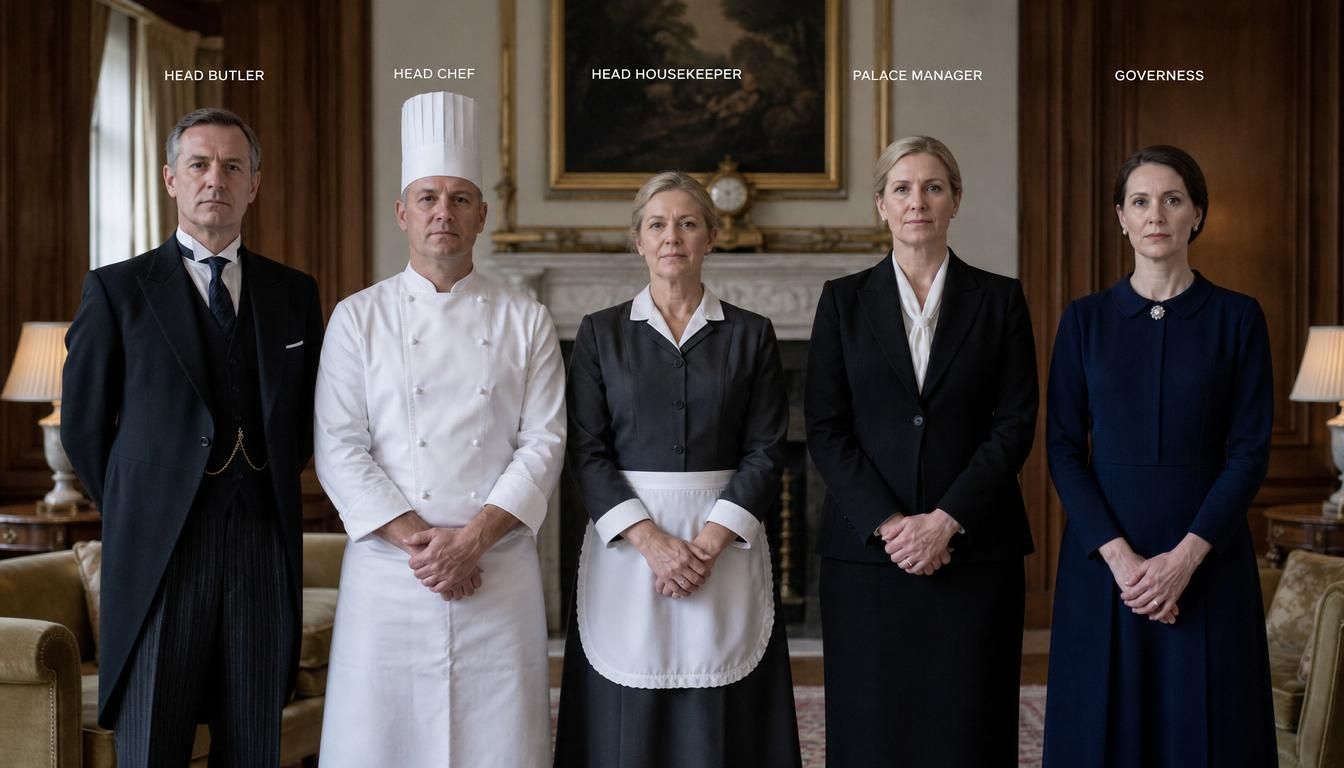
Few questions arrive in our office more often, or from a wider variety of principals, than the twin enquiries of what a senior member of private staff is properly asked to do, and what such a man or woman is properly paid for doing it. The two questions are inseparable, and we are always a little wary of the answer which addresses one without the other. A salary detached from the actual shape of the position tells a principal almost nothing, and a description of duties divorced from the terms on which they are performed tells a candidate almost nothing in return. We prefer, in our quiet way, to take the two together.
What follows is not a salary table. We do not produce them, and we are sceptical of the published documents which do. The figures which circulate on the public internet are too often drawn from a narrow slice of the market, presented without the context which would make them intelligible, and used to set expectations on both sides which the actual house is unlikely to meet. What we offer instead is a description of the work as it is genuinely carried out in the houses we know, and an honest account of the manner in which compensation is properly settled around it.
A senior butler in a well run private household is not, despite the persistence of the cinema, principally occupied with the polishing of silver. He is the front of house of the establishment. He receives guests on behalf of the principal, supervises the dining room and the drawing room, oversees the male staff of the house, attends to the cellar and the table, looks after the principal's wardrobe where there is no separate valet, and stands, on most evenings, as the last figure to confirm that the house is settled before it is given over to the night. He keeps the small standards by which the house is known to itself, and he absorbs, without comment, a great many of the smaller difficulties which would otherwise have reached the principal.
A senior housekeeper holds the female staff of the house in the same way. She is responsible for the linen, the laundry, the cleaning rotas, the seasonal turnings of the rooms, the floral arrangements where there is no separate florist, the supply of the bedrooms for guests both expected and unexpected, and the careful preservation of the principal's most personal possessions. In houses without a butler, she will often act as the senior of the establishment in fact, if not in title.
A chief of staff, palace manager, or estate manager sits above both. He or she is responsible for the running of the establishment as a whole, for the payroll, for the contracts with outside suppliers, for the seasonal moves between residences, for the recruitment and dismissal of junior staff, for the relationship with the family office on financial matters, and for the reporting of the household's life to the principal in whatever form the principal prefers. The chief of staff is, in our experience, the single appointment which most reliably distinguishes the well run great house from the merely well staffed one.
Around these senior figures sit the trades which the rhythm of the house requires. A private chef and his under cooks. A driver and, in larger establishments, a small chauffeur's office. A nanny, a governess or a tutor where there are children of the appropriate age. A valet for the principal, a lady's maid for the principal's wife. Gardeners, gamekeepers, grooms and security staff in the country. A secretary, a personal assistant and, in the largest houses, a small office for the chief of staff. Each of these positions has its own well established description of duties, and each has its own well established economics, which we will come to in a moment.
The most common error a new principal makes in the recruitment of senior staff is to fix his attention on the headline annual figure. The headline figure, in a serious private appointment, is rarely the most important number on the page. A house in central London which offers a butler a salary of one hundred and forty thousand pounds and asks him to find his own accommodation is, in real terms, offering far less than a house in the country which offers ninety thousand pounds, a private cottage on the estate, full board, school fees for one child of the staff member's family, and a contributory pension. Any candidate of experience will read the second offer as the more generous of the two, and rightly so.
The properly settled terms for a senior member of private staff therefore include, almost without exception, several heads beyond the salary itself. There is accommodation, very often a furnished flat, cottage or set of rooms within the establishment or in a property held by the family for the purpose. There is board, sometimes confined to meals taken on duty and sometimes extended to the staff member's own household. There is the provision of working dress where the position requires it, and the cleaning and maintenance of that dress. There is medical cover of the standard the principal would expect for himself. There is a contribution to a pension, which in the more thoughtful houses is treated as a serious matter and not as an afterthought. There is paid leave of a length suitable to the seniority of the role. There is, in many houses, an annual bonus paid privately at the end of the calendar year, and in the most enduring appointments there is a small understanding, never written down but always honoured, of what the family will do for the staff member in old age.
When all of these are taken together, the real value of a senior position in a distinguished household is, in our experience, substantially higher than the headline figure would suggest. The thoughtful candidate knows this and chooses accordingly. The thoughtful principal knows it as well, and structures the offer so that the value is felt over the long horizon of the appointment rather than expended on the salary line alone.
We are conscious that some indication of the bands of compensation is helpful, if only to allow the principal to recognise an offer which is markedly above or below the market. We give the following figures with the strong caveat that they describe what we have actually seen in serious private households in the last decade, that they vary considerably with the country, the size of the establishment, the seniority of the candidate and the manner in which the rest of the package is structured, and that no single figure should be taken as a benchmark divorced from those factors.
A senior butler in a major European or American household, with twenty years of professional experience and the running of a sizeable establishment, will typically be appointed at a salary of between one hundred and two hundred thousand pounds, with accommodation and full benefits in addition. A senior housekeeper of comparable experience will be appointed in a similar band, sometimes a little below it where the establishment is smaller and sometimes a little above where she stands at the head of a large female staff.
A private chef of serious training will typically be appointed at a salary of between eighty thousand and one hundred and fifty thousand pounds, with the higher end of the band reserved for chefs who travel with the principal and lead a small kitchen brigade. A senior driver will typically be appointed at a salary of between sixty thousand and eighty thousand pounds, with the higher end reserved for the man who runs the chauffeur's office of a large family. A governess of long experience, particularly one entrusted with the care of more than one child of the family across the years, will be appointed at a salary which has, in the houses we know, reached very substantial figures indeed, and is properly accompanied by accommodation, schooling support and the same long horizon understandings which attach to the most senior appointments.
A chief of staff of a major family will be appointed at a figure which begins where the senior butler's ends and which can, in the largest establishments, run substantially higher, with bonus arrangements which reflect the breadth of the responsibility. A palace manager or estate manager responsible for the entire household establishment, including the senior staff and all residences, is typically appointed at a salary of between one hundred and fifty thousand and two hundred thousand pounds, with accommodation, transport, and full benefits.
These bands are wider than the published surveys suggest, for the simple reason that the published surveys do not have sight of the houses in which the most distinguished work is done. The discreet appointments which are the proper concern of a private advisory office are not announced, and they are not entered onto the databases from which such surveys are compiled. The principal who relies on the published figure alone will, in our experience, either fail to recruit the candidate he wants or recruit a candidate of lesser quality at a price he believes to be the going rate.
The headline figure attracts the wrong sort of candidate. The properly settled terms attract the right one.
The published salary table is a useful instrument in the world of corporate employment, where the role is reasonably standard, the establishment is reasonably uniform and the candidate market is reasonably visible. In the world of private service, none of these conditions reliably holds. The duties of a butler in a London townhouse with two principals and no children bear only a passing resemblance to the duties of a butler in a Gulf palace which receives forty guests for dinner three nights a week. The salary which is generous in one country is modest in another. The candidate who is admirably suited to a small establishment may be quite wrong for a large one, and the figure he is paid for the first appointment will tell us very little about what he ought to be paid for the second.
The greater difficulty, however, is what the table omits. It tells the principal nothing about the candidate's bearing, his discretion, his ability to manage a difficult guest with grace, his loyalty under pressure or his willingness to work the unsocial hours which the rhythm of the house may require. These are the qualities for which a distinguished family is genuinely paying, and they cannot be expressed in a column of figures. The principal who settles the offer by reference to the table alone will, in time, discover that he has paid the going rate for a position he has not in fact filled.
It is worth saying plainly that the senior private staff of a distinguished household are paid, in the end, for the trust they hold rather than for the tasks they carry out. The tasks are real, and they are demanding, but they could in principle be performed by a great many capable people. The trust is not so easily found. The butler who knows the principal's affairs and never mentions them outside the house. The housekeeper who has seen the family in its private hours for fifteen years and has never spoken of what she has seen. The chief of staff who holds the keys, the passwords, the bank arrangements and the seasonal moves of the family in his quiet keeping. Each of these positions is, at heart, a position of trust, and the compensation is properly arranged to acknowledge that.
This is why the long horizon understandings around accommodation, pension and old age care matter so much, and why we counsel principals to treat them as a serious part of the offer rather than as a sentimental gesture at the end of the contract. A staff member who knows that the family will look after him in the years when he can no longer work has every reason to give the family his most loyal years. A staff member who does not, has every reason to keep one eye on the next position. The economics of trust are quietly but decisively shaped by what the principal does, or fails to do, on this question.
When we are asked to advise on the recruitment of a senior member of staff, we begin, before any figure is mentioned, with the actual shape of the position in the actual house. We meet the principal, we walk the establishment, we speak with the staff already in place, and we form a clear view of what the role will involve in practice. Only then do we begin to discuss the terms on which it is properly offered. The figure we propose is informed by what we have seen in the market, by what the house in question can sensibly afford, and by what we believe will attract a candidate of the calibre the family deserves. We are willing to argue for a more generous figure where the position requires it, and we are equally willing to advise restraint where the principal is being led to overpay for what the house genuinely needs.
We attend, with equal care, to the package around the salary. The accommodation, the board, the medical cover, the pension, the leave, the bonus arrangements and the long horizon understandings are each settled in writing where it is appropriate, and confirmed by quiet word where the matter is too private for the contract. We do this because we have learnt, over many years, that the offers which produce the longest and happiest appointments are the offers in which nothing essential has been left to chance, and in which the candidate and the principal both feel, on the day the contract is signed, that they have been dealt with fairly.
The question of private staff duties and compensation is, in the end, the question of how a distinguished family chooses to be served. The duties describe the life of the house. The compensation describes the manner in which the family acknowledges the men and women who make that life possible. Where both are settled with care, the household has every prospect of running with the quiet excellence its principals have a right to expect, and the men and women who serve it have every prospect of the long, secure and dignified careers which the profession, at its best, has always offered.


WRITTEN AND COMPILED BY OUR FOUNDER AND CEO, ROBERT WENNEKES
- HouseholdThe Mutual Care of House and Family
- HouseholdThe Private Cigar and the Art of the Leaf
- HouseholdThe Rhythms of the Winter Residence
HouseholdService Across Borders and Cultures
On the quiet courage required to enter another country's household, the disciplines that allow a member of staff to flourish far from home, and the rewards which extend well beyond the salary.
Read essay